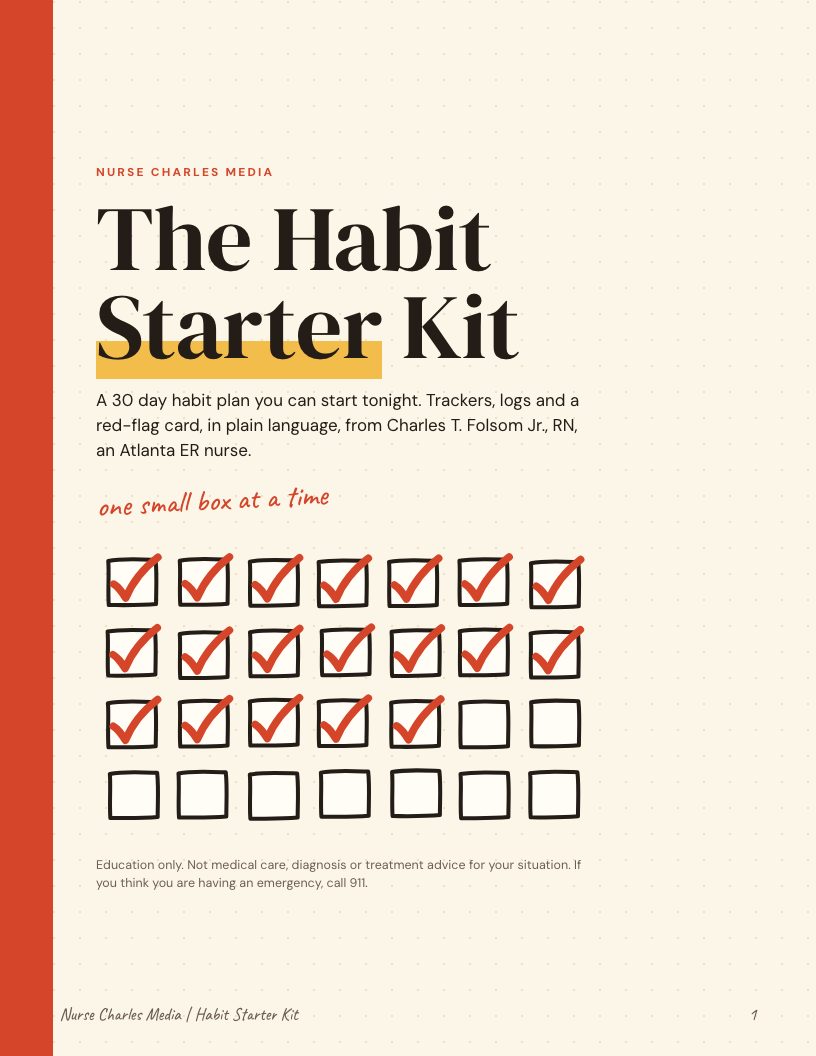
A printable, mobile-friendly workbook of about 20 pages: trackers, logs, a sourced red-flag card and a questions sheet. Plain language from Charles, an Atlanta ER nurse.
One-time price, $27. Digital workbook you use on your phone or print. Education about habits and navigating care, not medical advice.
Written by Charles T. Folsom Jr., RN
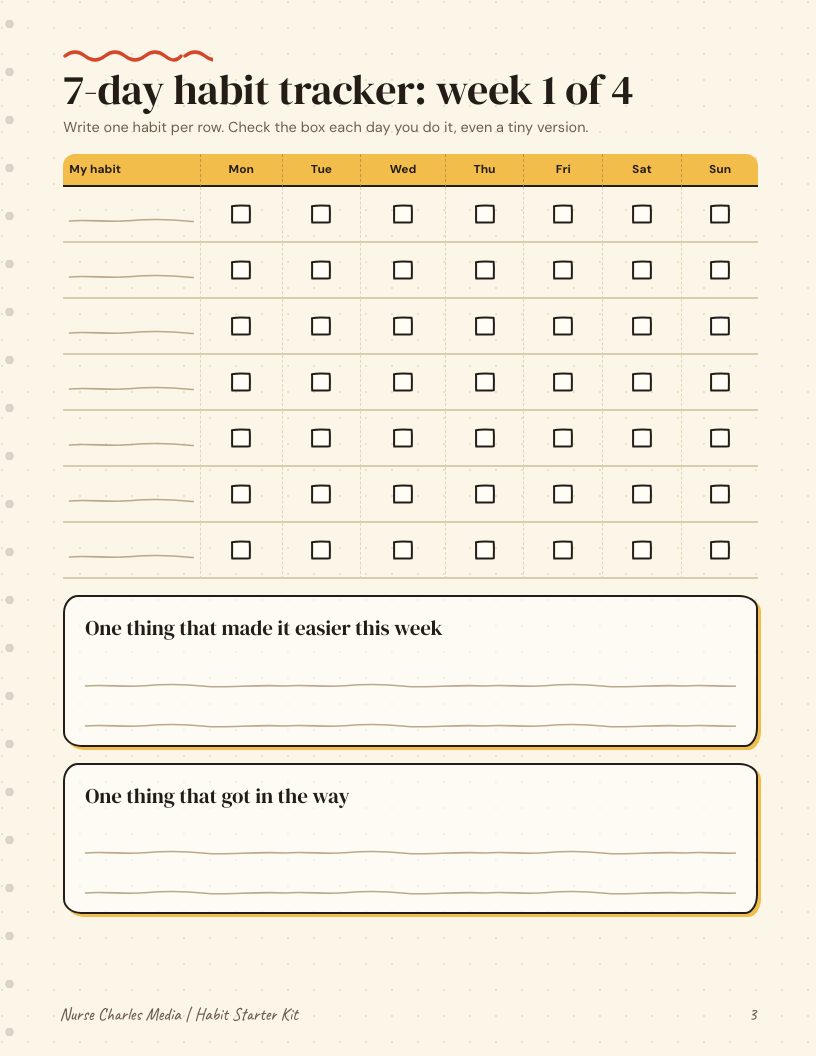
Check boxes work on your phone and save on that device. Or print it and use a pen. Here are seven of the pages.


Eight parts, about 20 pages. Each one is built to take a minute or two a day.
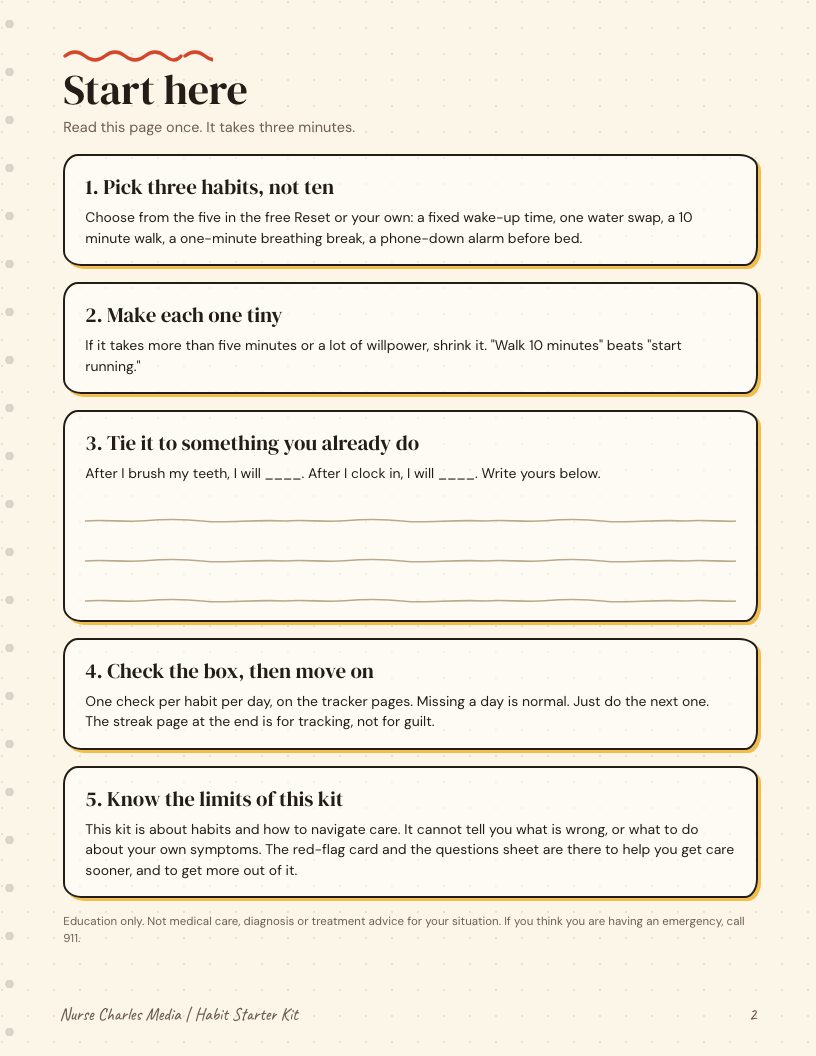
One page. Pick three tiny habits and tie them to your day.
Four weeks of check-the-box pages.
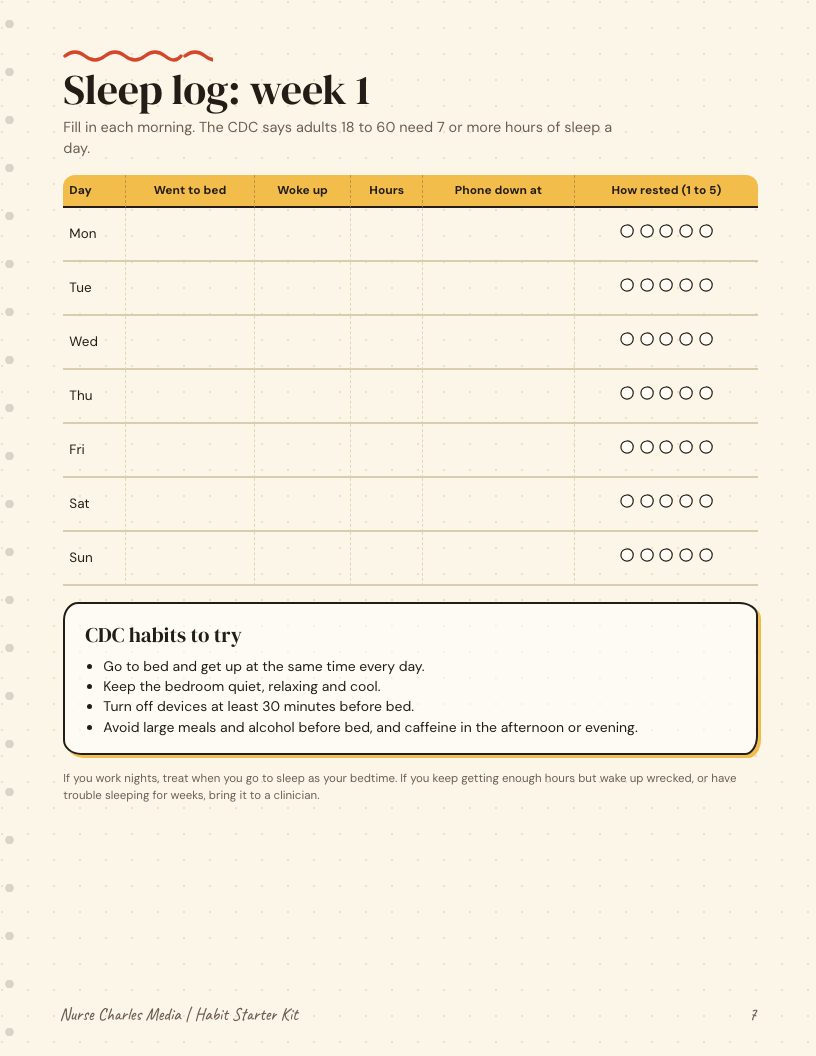
Notice your pattern. Two weeks of each.
A one-minute daily check and a list of ideas to pick from.
Plan it, put a time on it, check it off.
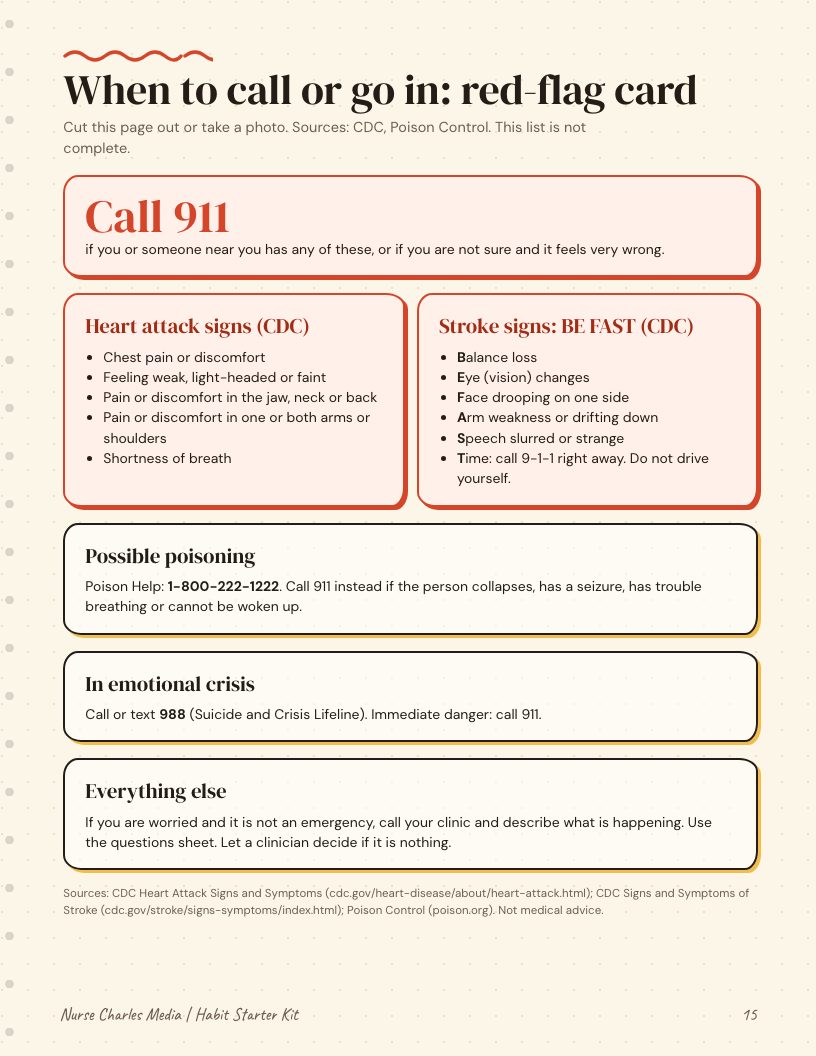
Heart attack and stroke signs, Poison Help and 988, sourced to the CDC and Poison Control.
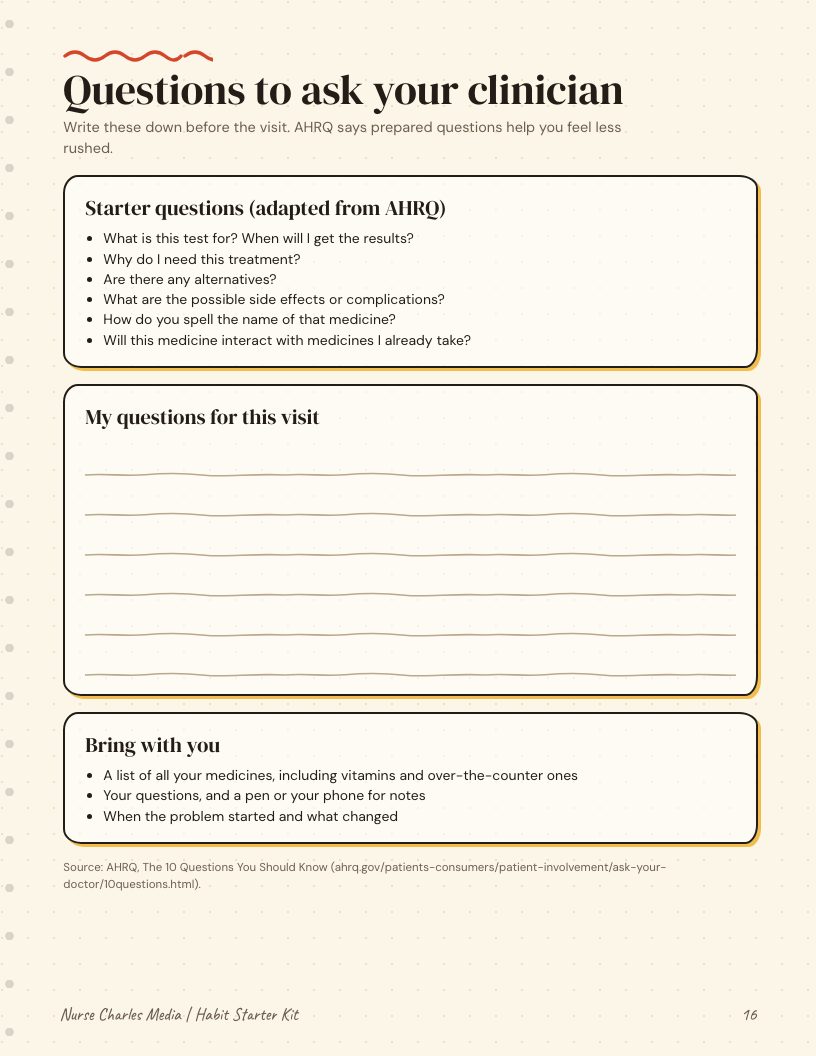
A prepared-questions sheet and visit notes page, adapted from AHRQ.
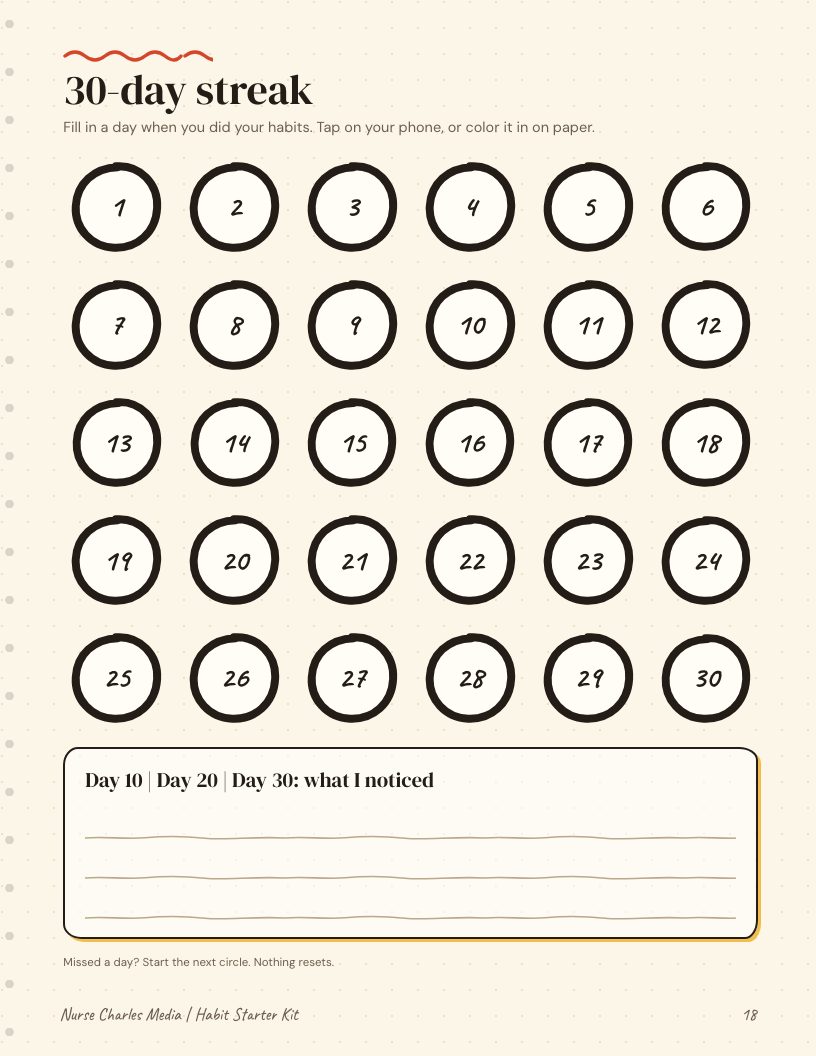
Fill in a circle a day. Missed one? Start the next.
Fill in a circle on the days you do your habits. Missed one? Start the next. Nothing resets. A streak page is for tracking, not for guilt.
Checkout opens soon. Leave your name and email and get the link on day one. Nothing is charged by asking.
Get the link on day one. Name and email only.
We will email you the link the day checkout opens. In the meantime, start the free 5-Day Reset.
People who finished the free Reset, or just want some structure. If you want to build a few small habits and know when to get care, this is for you.
It is not medical care. It does not diagnose anything or tell you what to do about your own symptoms. It teaches habits and how to prepare for care, and it sends you to a clinician for the rest.
No. It is education about habits and how to navigate care. It cannot diagnose anything or tell you what to do about your own symptoms. Talk to a clinician about those, and call 911 in an emergency.
A workbook of about 20 pages. It works on your phone, and there is a PDF you can print.
The CDC, NIH (NIMH), FDA, AHRQ and Poison Control. The last page of the kit lists every source.
Not by itself, and nobody can promise that. Research on habit formation found it took about 66 days on average for a new daily behavior to become automatic, with wide differences between people, and that missing the occasional day did not derail it. The kit gets you started and gives you a place to pick back up. Source: Gardner, Lally and Wardle
Soon. Leave your email above and you will get the link the day it opens.
Education only. This is general information about habits and how to navigate care. It is not medical care, diagnosis or treatment advice for your situation, and Charles is not your clinician. If you think you are having an emergency, call 911.